My October Challenge: Building and Releasing Minesweeper Hex
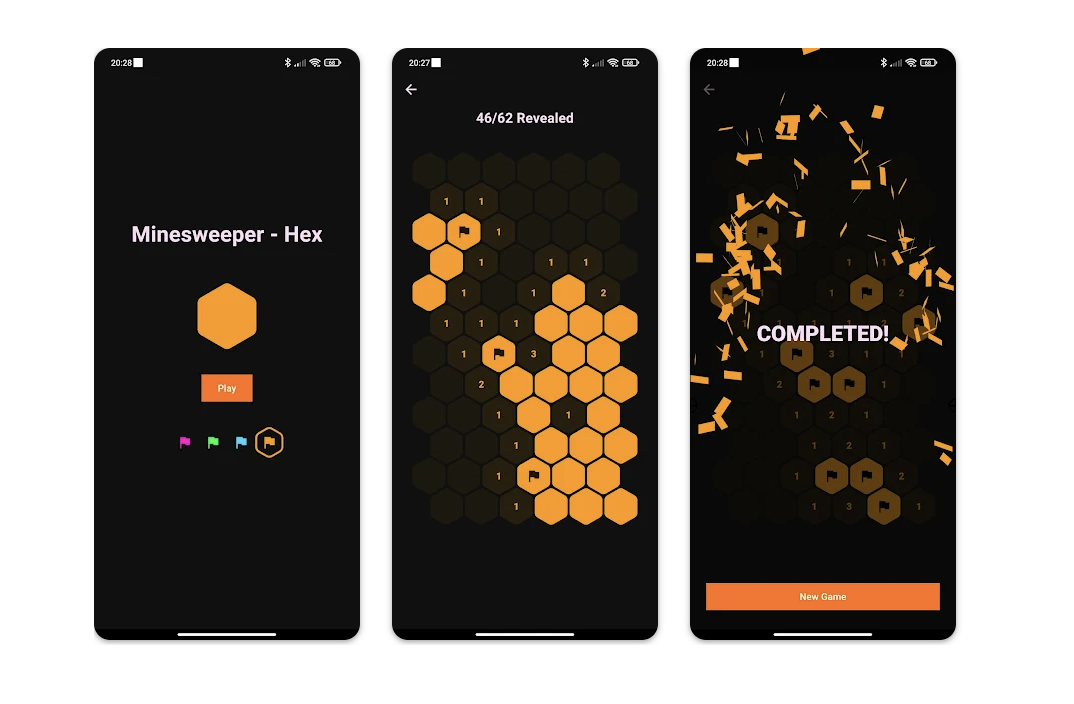
Last month, I set myself a new challenge: to build and release a small app from scratch within a month. This decision came after a realization I had while working on my previous project. That project had so many uncertainties and things left to do that when someone asked when I expected a first release, I realized it could take a year or two, even just to make something workable. And that would be before the inevitable rounds of tweaking and refining. The thought of working on it for the next few years felt daunting and demotivating. So, I decided to take on something smaller, more contained—a project I could complete from start to finish in a limited time.
I chose to build a simple minesweeper game with hexagonal fields, calling it "Minesweeper Hex." Minesweeper felt ideal because it has a clear set of rules, so I could skip the step of designing a new game concept and dive straight into development.
Lessons from the Challenge
This experience taught me the importance of focusing on essentials. With only a month, I realized that extra features like multiple game modes, achievements, or even in-game ads could wait until later. Instead, I focused on creating a playable version and delivering a complete experience with core gameplay.
The challenge also influenced how I approached the game’s architecture. Given the tight timeline, I chose to go “back to basics”—avoiding complex architecture and abstractions. I relied directly on services and resources, using mainly ChangeNotifiers instead of external state management solutions. This simple structure kept development streamlined and allowed me to focus on getting the game functional.
Releasing the App: Not as Daunting as Expected
One surprising aspect was how smoothly the release process went. Initially, I saw it as a big mountain to climb—setting up store listings, creating screenshots, and filling out forms. But once I got started, I realized it wasn’t as difficult as I’d anticipated, and in a few days, everything was ready to go live.
Leveraging AI to Streamline Development
Throughout the project, AI tools like ChatGPT were incredibly useful. For example, ChatGPT helped me set up the base game logic and gave me ideas on implementing CustomPainter for the hexagons. Although the initial code needed adjustments, it was a great starting point. AI also helped me draft app store descriptions, allowing me to spend more time refining the game.
Final Thoughts
Completing "Minesweeper Hex" in just a month was a rewarding experience. The challenge of creating something from start to finish in a short period reminded me of the power of focusing on essentials. I’m excited to apply these lessons and continue taking on projects that feel achievable yet rewarding.
Download Minesweeper Hex
I’ve made Minesweeper Hex available on both iOS and Android.